Holy Family 2025
Today’s liturgy is an example of the continuous development of the Roman Rite across the centuries. Although the Mass has ever remained essentially the same, and the Latin rite in its ordinary texts has changed but little since the first millennium, the Church can – and many times has – introduced new Masses, new compositions of new feasts in order to bring into focus more effectively some aspect of our faith. The Feast of the Holy Family is one such example and is of recent vintage.
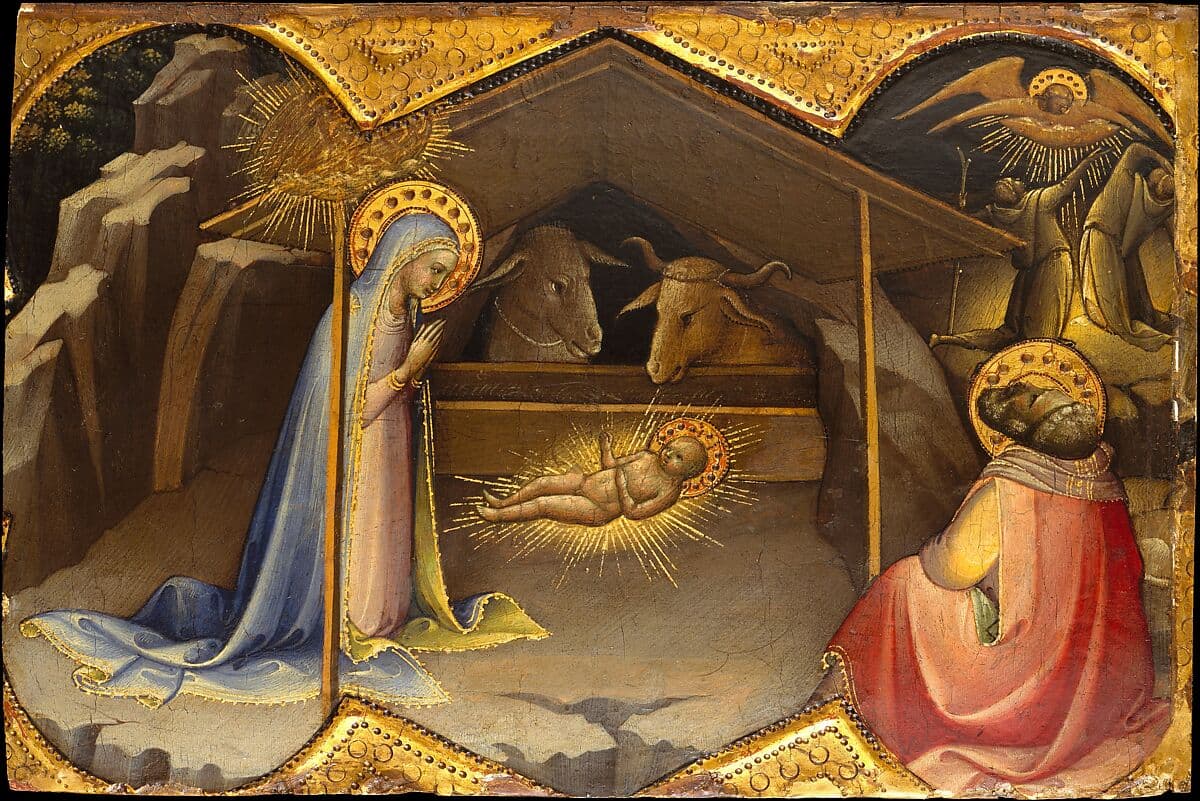
Beloved in Christ, today’s liturgy is an example of the continuous development of the Roman Rite across the centuries. Although the Mass has ever remained essentially the same, and the Latin rite in its ordinary texts has changed but little since the first millennium, the Church can – and many times has – introduced new Masses, new compositions of new feasts in order to bring into focus more effectively some aspect of our faith. The Feast of the Holy Family is one such example and is of recent vintage. Devotion to the Holy Family as such began in Canada by the founding of the Association of the Holy Family in 1663. A similar association was started in Paris in 1674 and from that time forward numerous religious congregations and organizations dedicated to fostering devotion to the Holy Family of Nazareth have been established. Pope Leo XIII approved a liturgical feast for Canada which Pope Benedict XV extended to the universal calendar of the Roman Church, ordering it to be celebrated today, the Sunday following the Epiphany. And is it not fitting that the Christmas cycle should include this aspect of Our Lord’s life and witness? For between the Messiah’s fulfillment of the expectation of the ages by His mysterious birth in Bethlehem and the commencement of His public ministry through His Baptism by John in the Jordan River falls the events of His divine childhood. These events are largely hidden from our view but were characterized by His perfect obedience to Mary and Joseph; long years by which He, the God-Man sanctified family life. Born in the poverty and simplicity of a cave-stable, this little boy was destined to be a sign of contradiction: a stumbling block for many, the source of life and salvation for others. He received mysterious homage from strange men come to Him from the east. Their gifts of gold, frankincense and myrrh foretold the glory – and sorrow– which was to be His earthly destiny; gold because He was a King; frankincense because He was God; myrrh because He was the royal victim to be offered in sacrifice for the life of the world. But the Gospels only recount a single incident in the whole of His life between His first epiphany to the Gentiles in the persons of the Magi and His second Epiphany through which He initiated His public life as the Savior of mankind – that is to say, His baptism by John in the Jordan wherein the Holy Spirit descended upon Him visibly and divine approbation was given to all present through the voice of the Father. Today’s Gospel recounts that one perplexing story of Jesus’ childhood: His disappearance and recovery after three days in the Temple. It is, on the one hand, a foretelling of His disappearance in death and reappearance by Resurrection three days later, in the same way, or type as Jonas’ three days in the belly of the whale. More immediately, though, it presents us with the disturbing reality of a child who was also God. Any mother would have sought her missing child frantically after three days’ disappearance. And Mary and Joseph were parents like all others. “Why have you done this to us? We have been searching for you anxiously.” To this very understandable rebuke the twelve year old issues a most astonishing reply: “Why have you been looking for me? Don’t you know I must be about my Father’s business?” And the Gospel continues – they quite simply did not understand Him. But Mary kept all these things in her heart. And how could she have done otherwise? She had been visited by an angel twelve years before and conceived this child without the agency of a man; shepherds had come speaking of angelic rejoicing in the annunciation of His birth. Not the least, certainly, had been the mysterious visit from those three dark strangers, clad in foreign splendor, led on by a miraculous from the East, bearing strange gifts for this Jesus to Whom they knelt in adoration. And in connection with them King Herod, mad with jealousy, and seeking this very child, had had all the children in the entire region slaughtered. Yes, indeed, Mary pondered the mystery of this boy in her heart because she knew He was her own and yet was most assuredly from God. And Joseph had taken Him to heart as his own for love of his beautiful and simple wife, having led them, at an angel’s command, on a harrowing trip to the safety of a foreign country when Herod threatened not only the boy, but the very fabric of their life together as a family. And it is here that we find the heart of the mystery which Holy Church places before our hearts today: this child – God Himself – was raised within the fold of a human family which has known all the joys and sorrows characterizing our difficult human condition. There we see the example of the nurture and love of parents whose very life and concern was this, their child. He, in turn – the Creator of the Universe and Redeemer of all mankind, including His own sinless mother – He was obedient to His parents in the manner of a good child. We should mark well this environment of pro-found humility: the very God Who is the author of all that is, in His divine wisdom, submitted with love and docility to the human parents to whom He had entrusted Himself. In that family – as it should be in our own – holiness and virtue reigned: no feigned liberation from responsibilities which life imposed, no rebellion against authority or duty, no complaints about the insensitivity of child to parents, or parents to child, or spouses between themselves. God, Who created man to live in society and established the family as its basic building block – God Himself set the example of its beauty and perfection: the Incarnate Lord lived in dutiful submission to His parents and by His own life and witness sanctified the fundamental social structure of human living. Beloved, this family of Nazareth is the model par excellence of what family life should entail: prayer, patience, long suffering and sacrificial love. Giving and receiving, sometimes without full understanding, sometimes with pain, and sometimes with joy: unconditional love which manifests itself by unconditional sacrifice. It is the mystery of the Christian way. Most Beloved in Christ, today we are bidden to remember two things: firstly, this world is not our permanent dwelling place; secondly, the Holy Family of Nazareth, sanctified by the presence of one no less than God Himself, suffered its share of joy and sorrow, life and loss. Let us pause and in the silence of our hearts peer into the windows of that simple dwelling in Nazareth: what love, what tenderness that family teaches us to practice in our own. Patient and persevering in trials, ever thankful for consolations. Let us, in the joy we feel throughout this Christmas season, do as Mary did: let us ponder all these things in our hearts. Then, too, by divine grace will the Lord our God continue to grow is stature and wisdom in the secret chamber of our souls – this to His glory and for our salvation.